The Peoples Drug on the Corner
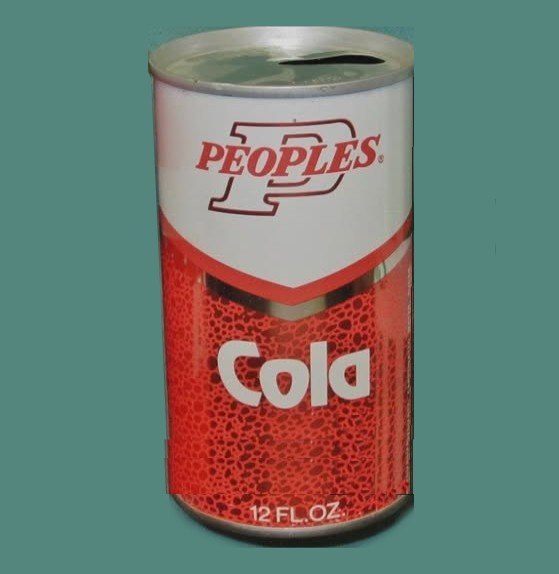
For almost ninety years, a PEOPLES DRUG sign was as familiar on a Northern Virginia shopping-center facade as the courthouse or the corner church — prescriptions, a soda fountain, penny candy, even the store’s own house-brand cola. Then, within a few years in the early ’90s, it was gone.
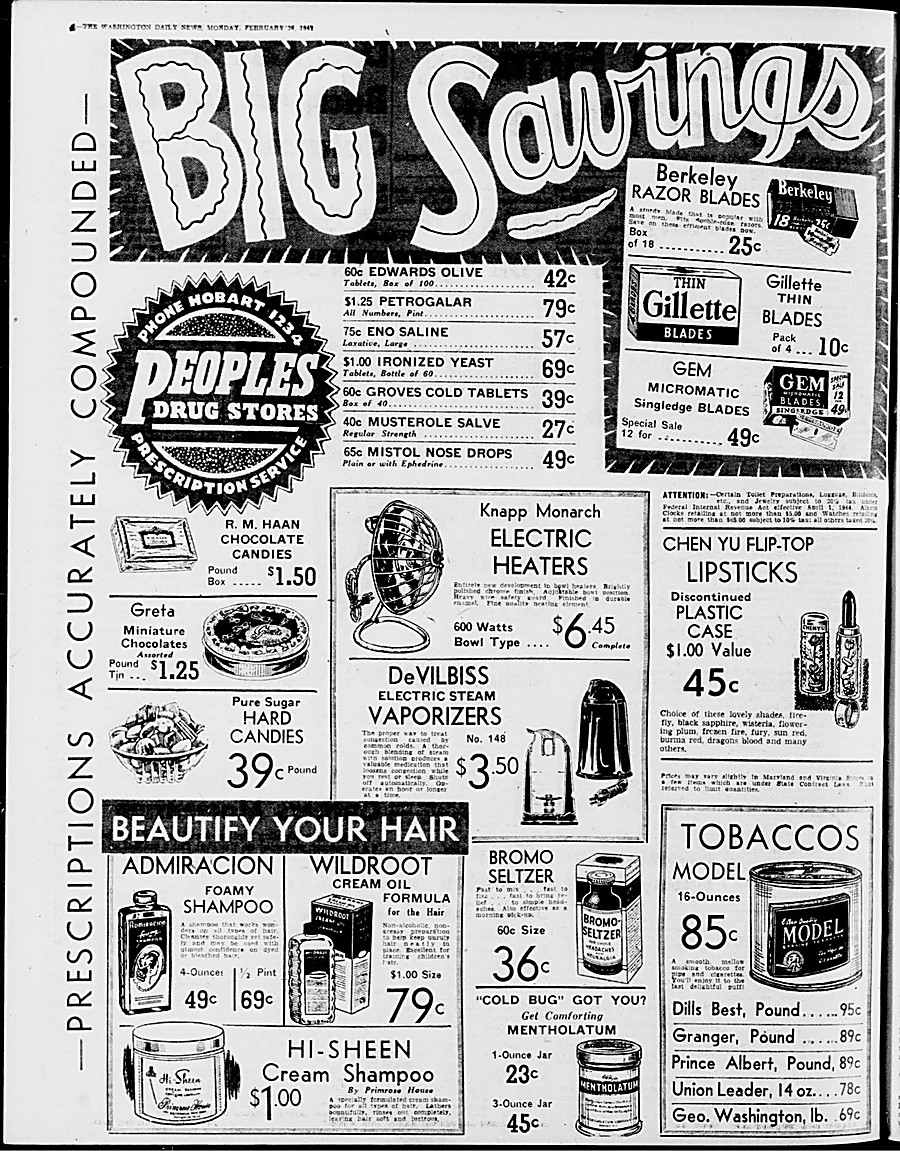
Peoples got its start in 1905, when Malcolm Gibbs opened the first store in Alexandria, Virginia, and quickly followed it with a Washington location on 7th Street NW. Gibbs built the chain around a simple pitch: an affordable, accessible neighborhood pharmacy, not a specialty shop for the well-off. It worked. By 1944, Peoples operated 130 stores under its own name plus two subsidiary brands, Days Drug and Shearer Drug. By 1970 the chain had grown to 252 stores spread across eleven states from Florida to New York, employing 5,500 people and ringing up $220 million a year — known as much for its lunch counter as its pharmacy. Regulars who grew up on one still talk about the french fries.
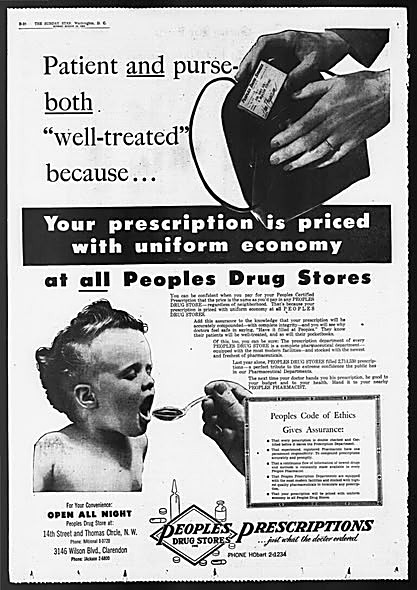
What happened next is a bit of a corporate-history plot twist: in 1975, it was Peoples that got bought, not the other way around. Lane Drug, a smaller chain out of Toledo, Ohio, purchased Peoples outright — then kept the far more recognizable Peoples name for the combined 380-store company, along with newly-acquired regional brands like Schuman Drug, Read Drug, and Lee Drug. Under CEO Sheldon Fantle, the enlarged Peoples kept growing through acquisition, and by 1984, when the Canadian conglomerate Imasco bought the chain for $320 million (roughly $815 million today), it had swelled to 600 stores and ranked among the largest drug chains in the country.
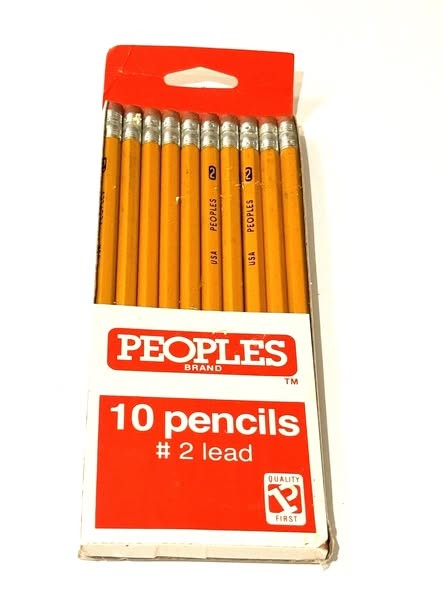
That marketing push made it onto local television, too. Here’s an actual Peoples Drug commercial from 1991, right around the time CVS was preparing to take over:
A Peoples Drug television commercial from 1991, not long before the CVS conversion began.
It’s also the site of a piece of Northern Virginia history most people have never heard. On June 9, 1960, a biracial group of Howard University students, organized by the Non-violent Action Group under divinity student Laurence Henry, sat down at the whites-only Peoples Drug lunch counter at Lee Highway and Old Dominion Drive in Arlington and refused to leave. The counter closed rather than serve them; they stayed seated for hours anyway, reading quietly. The protest spread to more stores the next day, drawing a counter-demonstration from American Nazi Party leader George Lincoln Rockwell at a nearby Drug Fair. After a pause for mediation and a second wave of sit-ins on June 18 at Woolworth’s and Landsburgh’s, the campaign broke fast: on June 22, 1960, Woolworth’s announced it would desegregate — and Peoples, Drug Fair, Landsburgh’s, and Kann’s all followed suit that same day. Within days, nearly every chain-store lunch counter in Arlington, Alexandria, and Fairfax had integrated, making it one of the swiftest successful sit-in campaigns documented anywhere in the country. Walk the route yourself on NovaMuseum’s Black Heritage Tour of Arlington.
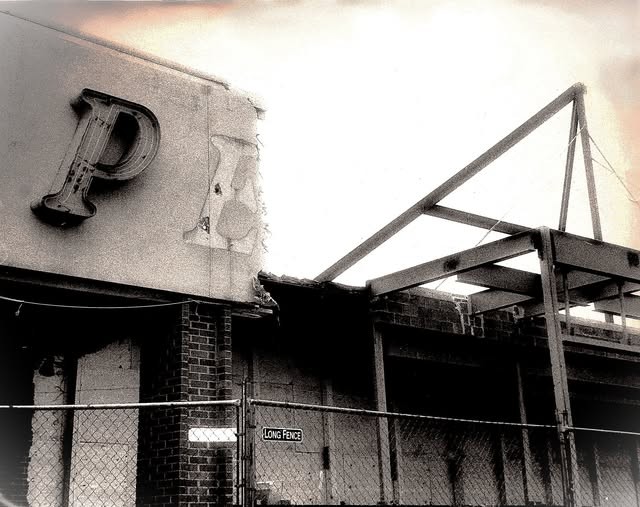
Imasco sold off most of its other divisions between 1986 and 1989 but held onto Peoples until 1990, when Melville Corporation’s CVS bought the chain for $330 million. CVS kept the Peoples name on the stores for four more years — long enough that a whole generation of NoVA kids grew up thinking of it as simply “the drugstore” — before converting the last of them to CVS/pharmacy in May 1994, ending an 89-year run. By then, stores like the one at Greenbriar Shopping Center in Chantilly were already being torn down; the photo above shows what was left of one: a bare “P” where a full sign once hung, a boarded storefront, a chain-link fence. A brand that anchored dozens of Northern Virginia corners for three generations is now almost entirely gone from the built landscape.
Do you remember your neighborhood Peoples Drug? Share your story with NovaMuseum — everyday landmarks like this one disappear from public memory faster than any battlefield or monument, and that’s exactly the gap this project exists to fill.
Sit-in facts per WETA’s Boundary Stones; corporate history per Wikipedia’s Peoples Drug entry and additional reporting via Ghosts of DC.